
Faculty Profile
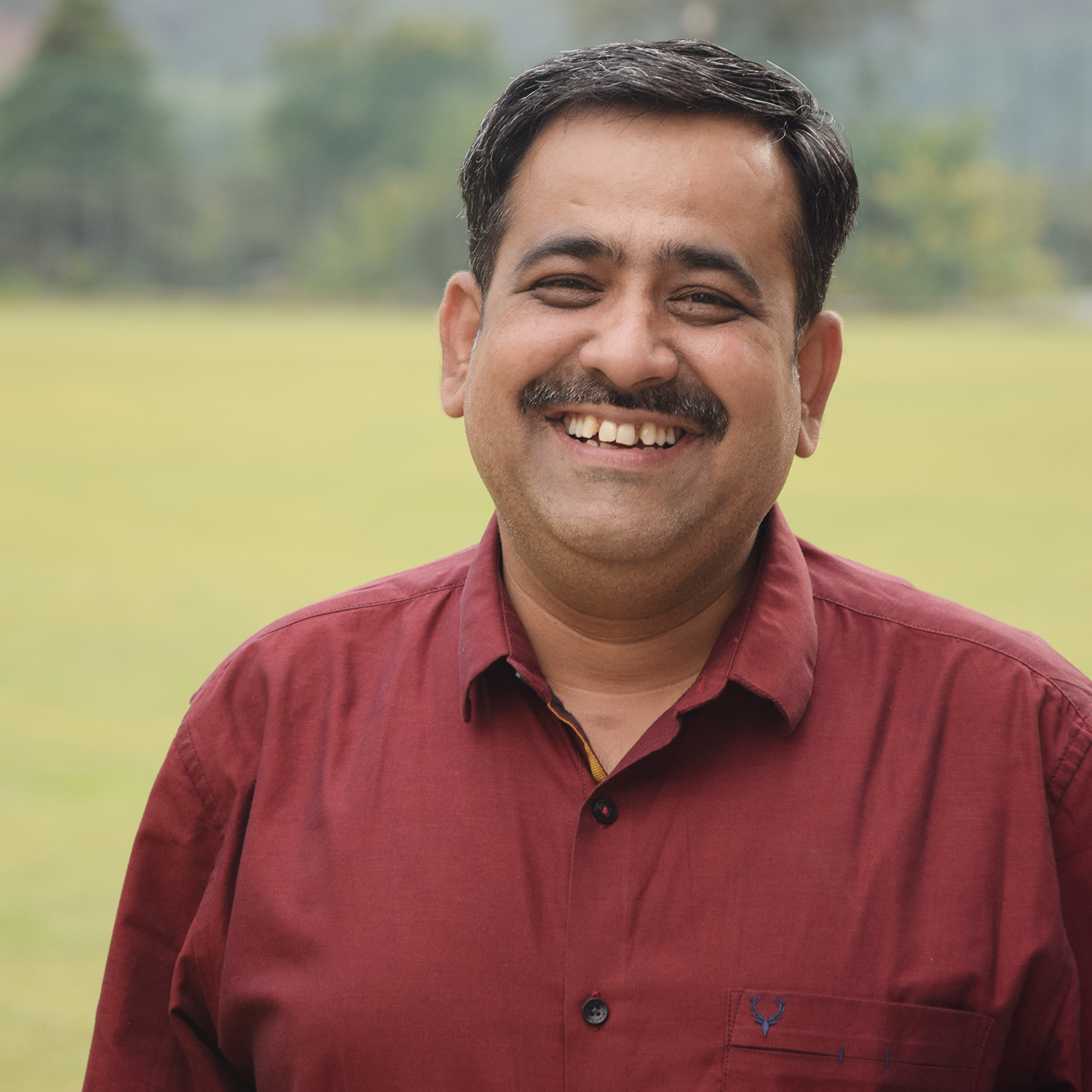
Dr. Amit B. Pawar
Associate Professor
Office: A7-202
School of Chemical Sciences
E-mail: amitpawar@iitmandi.ac.in
Phone: +91-1905-26-7116
Personal Information
- Associate Professor, IIT Mandi, (2024-present)
- Assistant Professor, IIT Mandi, (2019-2024)
- DST-Inspire Faculty, CSIR-Indian Institute of Chemical Technology, Hyderabad, INDIA, (2015-2019)
- Postdoctoral Associate, Prof. Sukbok Chang's Group, KAIST, Daejeon, Republic of Korea, (2013-2015)
- Ph.D: Indian Institute of Science, Bangalore, 2007-2012 (With Prof. K. R. Prasad)
- M.Sc: (Organic Chemistry) from University of Pune, Pune, 2005-2007
- B.Sc: (Chemistry) from University of Pune, Pune, 2002-2005
Teaching
- CY502 - Photochemistry and Pericyclic Reactions
- CY501 - Organic Reactions and Mechanism
- CY504 - Heterocyclic Chemistry
Awards, Recognition and Membership
- DST-Inspire Faculty Award by DST, New Delhi, India (January 2015)
- Received 1st prize from Eli-Lilly (USA) for "Eli Lilly Asia Outstanding Thesis Award 2012."
- Senior Research Fellowship (SRF) by CSIR, New Delhi, India (2010- 2012).
- Junior Research Fellowship (JRF) by CSIR, New Delhi, India (2007-2010).
Research Area
Organic Synthesis, C–H Activation
- Cp*Co(III)-Catalysed C-H Functionalization
- Total Synthesis of Natural Products
- Photo-redox Catalysis and Electrocatalysis
Research Interests
First-row transition metals are available abundantly in Earth's crust, compared to their 4d and 5d analogs. Despite their high natural abundance and low toxicity, first-row transition metals are underutilized in C-H activation. Our group is involved in the development of novel organic transformations using Cp*Co(III)-catalysis. In recent years, the area of mild C−H activation has gained significant importance, as it allows to carry out the reactions at or below room temperature and in the absence of any oxidant or reductant. This results in the enhancement of the functional group tolerance of the reactions and ultimately leads to the application in the late-stage functionalization of complex biomolecules. Our group is focusing on the development of mild C−H activation using Cp*Ir(III) catalysis especially using α-diazocarbonyl compounds for the synthesis of various biologically important heterocyclic scaffolds. Our group is also interested in the total synthesis of indolizidinone types of natural products and their analogous using C−H functionalization strategy.
Representative Publications
- Free Amine-Directed Ru(II)-Catalyzed Redox-Neutral [4 + 2] C−H Activation/Annulation of Benzylamines with Sulfoxonium Ylides. Yogesh N. Aher and Amit B. Pawar*, J. Org. Chem 2022.
- Cp*Co(III)-catalyzed C–H amination/annulation cascade of sulfoxonium ylides with anthranils for the synthesis of indoloindolones. Yogesh N. Aher and Amit B. Pawar*, Chem. Commun. 2021, 57, 7164.
- Cp*Ir(III)-Catalyzed C−H/O−H Functionalization of Salicylaldehydes for the Synthesis of Chromones at Room Temperature. Dhanaji M. Lade, Yogesh N. Aher and Amit B. Pawar*, J. Org. Chem. 2019, 84, 9188.
- Cp*Ir(III)-catalyzed C−H/N−H functionalization of sulfoximines for the synthesis of 1,2-benzothiazines at room temperature. Yogesh N. Aher, Dhanaji M. Lade and Amit B. Pawar*, Chem. Commun. 2018, 54, 6288.
- Cp*Co(III)-catalyzed C−H functionalization cascade of N‑methoxyamides with alkynedione for the synthesis of indolizidines. Lahu N. Chavan; Krishna Kumar Gollapelli; Rambabu Chegondi* and Amit B. Pawar*, Org. Lett. 2017, 19, 2186.