About the Program
The Master of Science (M.Sc.) program in Chemistry at IIT Mandi is a premier two-year postgraduate program designed to provide students with an advanced, comprehensive foundation across modern chemical sciences. The curriculum bridges core principles with emerging interdisciplinary boundaries, balancing rigorous foundational theory with extensive experimental training. A key highlight of the program is its research-intensive framework, featuring a year-long dissertation project where students work alongside faculty on cutting-edge topics in frontline research laboratories. The program is specifically structured to cultivate critical analytical thinking and advanced practical skills, thoroughly preparing graduates for competitive research and development positions in industry, national laboratories, and elite doctoral tracks worldwide.
Prof. Aniruddha Chakraborty (Coordinator)
Prof. Chayan K. Nandi (Co-Coordinator)
About the Curriculum
Common core courses constitute the foundation of the M.Sc. (Chemistry) program of IIT Mandi. They cover about 36% of the curriculum. This segment includes several fundamental courses of organic, inorganic and physical chemistry, based on topics like organic reaction mechanisms, photochemistry, pericyclic reactions, heterocyclic chemistry, main group chemistry, transition metal chemistry, organometallic chemistry, advanced quantum chemistry, group theory, spectroscopy, chemical & statistical thermodynamics, reaction dynamics, kinetics & catalysis.
Chemistry Elective courses offer the students a wide array of fundamental as well as application-oriented chemistry courses with several of them being interdisciplinary in nature. They cover about 19% of the curriculum. This diverse selection gives ample freedom to the students to pursue their choice of area in chemistry as they find relevant for their research projects and future research endeavours. Chemistry elective courses have been developed on areas like reagents in organic synthesis, stereochemistry, natural product synthesis, organic & inorganic spectroscopy, bioinorganic chemistry, crystallography, fluorescence spectroscopy, microscopy, polymers, nanomaterials, supramolecular chemistry, computational chemistry, hydrogen generation & storage, analytical techniques, bio-inspired materials, molecular & bio-electronics etc.
Chemistry Hands-on courses are divided into two components: Laboratory courses and Research projects and they cover about 30% of the curriculum. We offer three laboratory courses on three major branches of chemistry i.e. organic chemistry, inorganic chemistry and physical chemistry. These courses are designed in such a way that they serve as a bridge between theoretical understanding and experimental skills required in modern chemistry research. The laboratory courses involve performing organic reactions to synthesize and purify organic compounds, inorganic quantitative and qualitative analysis of acids-bases, metal ions, synthesis of inorganic complexes, nanoparticles and their characterization by UV-VIS spectra, Fluorescence, FTIR, NMR, HRMS, X-Ray diffractions etc., determination of critical micellar concentration, pKa, distribution coefficient, equilibrium constant, phase diagram etc., interaction studies and titrations.
Research project component has been carefully designed to introduce the students to cutting-edge chemistry research, as early as possible. In this unique design, during the first two semesters, students get a flavour of chemistry research through Design Practicum (DP-I & II), where they do intensive literature survey to identify a research problem that they will work on in the 3rd and 4th semester. In the third semester, the actual Postgraduate Project work starts, and students perform extensive research work on individual research projects over the second year of M.Sc.
Curriculum Structure Breakup
Chemistry Core Courses
Fundamental building blocks including advanced organic, inorganic, kinetics, thermodynamics, and quantum mechanics surfaces.
Chemistry Hands-on & Lab
Divided between laboratory courses across the three primary tracks and intensive multi-semester postgraduate dissertation research project works.
Chemistry Elective Courses
Discipline core options providing freedom to choose specific target fields like spectroscopy, computational design, polymers, and nanomaterials.
Free Electives
Allied interdisciplinary subjects distributed across external branches and social sciences boxes to expand specialized career targets.
Course Distribution
A comprehensive semester-wise curriculum layout and course registry for the 2-Year M.Sc. Chemistry Program.
Semester-Wise Layout
Chemistry Discipline Elective Pool
Our Alumni
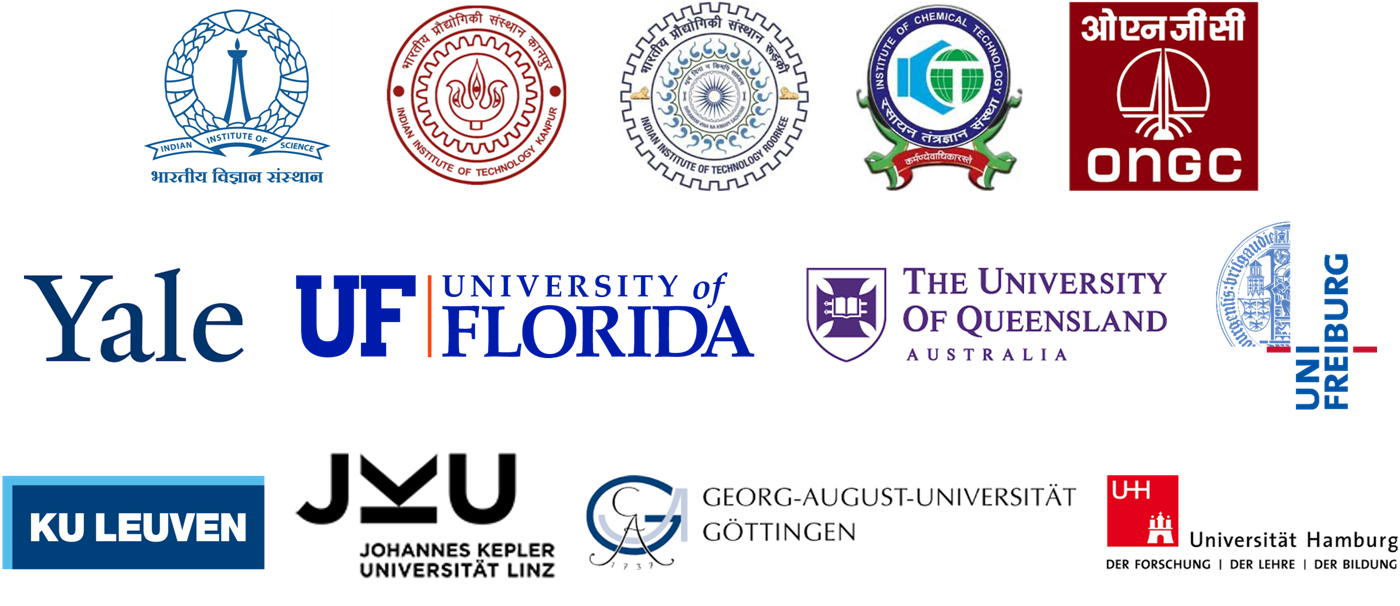
Our MSc Chemistry alumni have secured academic and industrial careers in highly reputed national and international institutes and organisations. For more details please visit IIT Mandi’s Alumni page.
https://alumniconnect.iitmandi.ac.in
Quick Links
Essential academic portals, institutional regulations, and student utilities for the BS-MS program.